
What the line is designed to save.
The efficiency of an evaporator and the recovery on a finisher are fixed on the day the plant is specified, not negotiated afterwards. Here is what was chosen, and why.
 Primary goal · Goal 9Industry, innovation and infrastructure
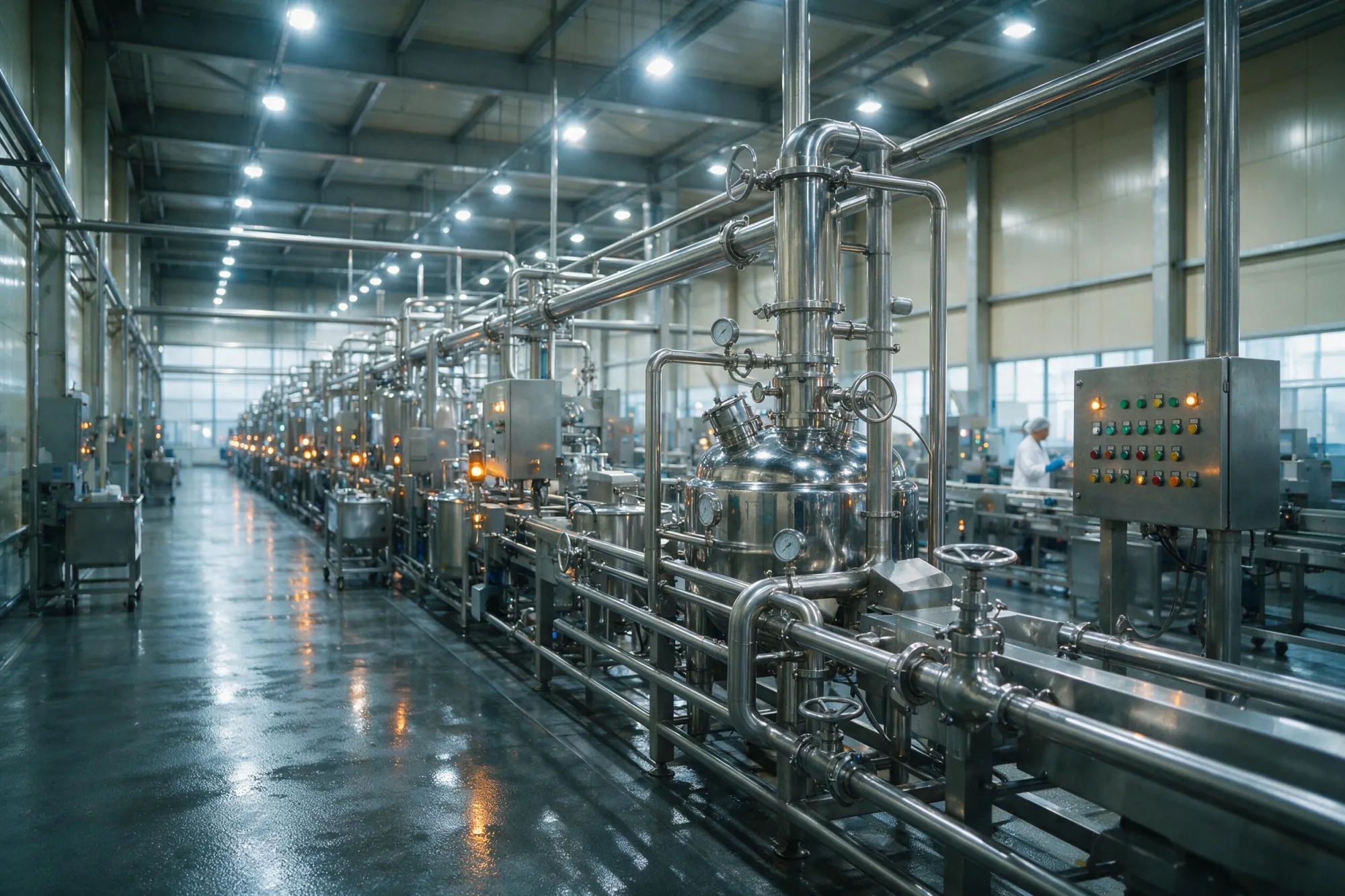
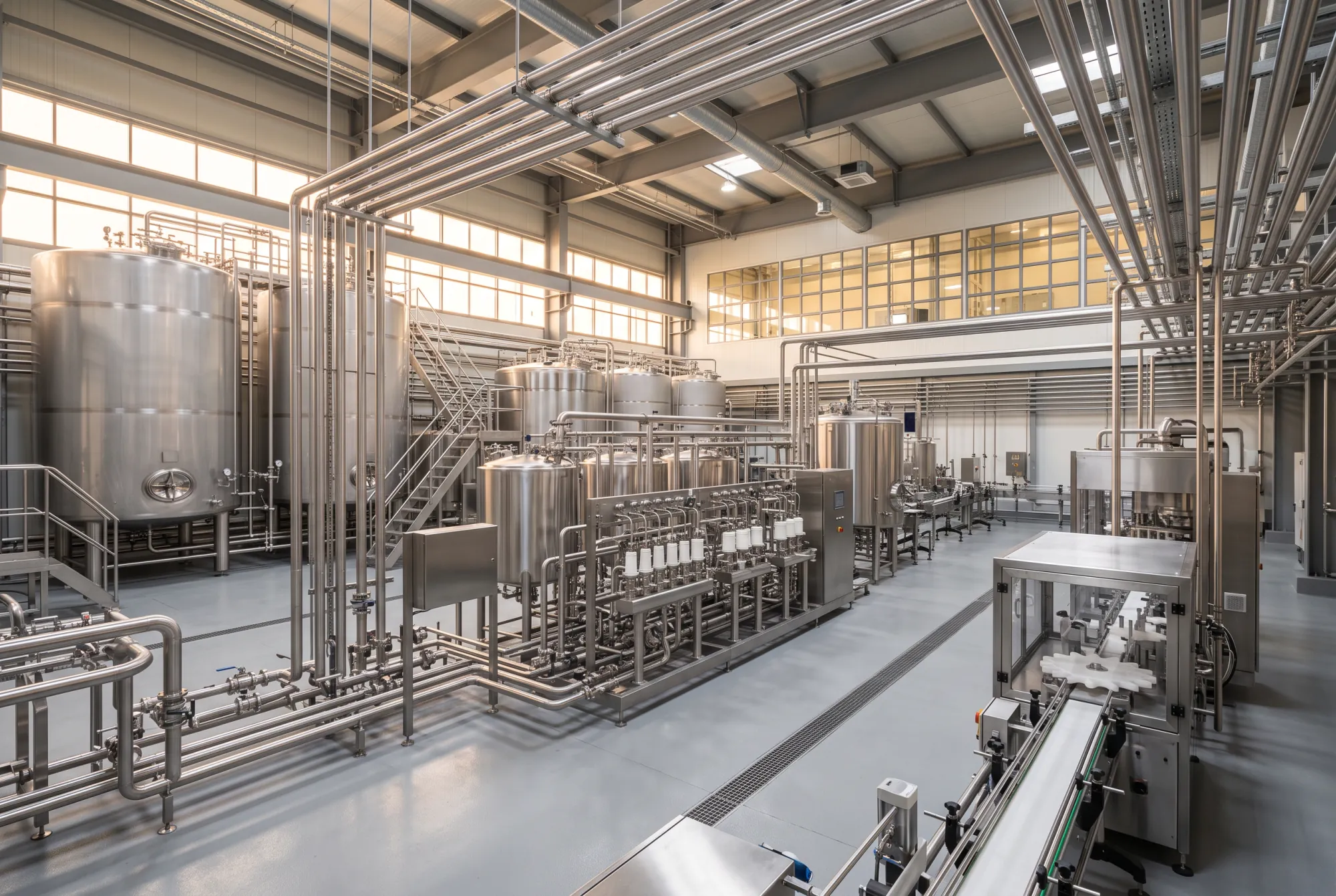
CFT processing at Sadat City — where the energy per tonne is won or lost.
A new facility has one advantage an established one does not: nothing has to be retrofitted, because the efficient option can simply be specified at the start.
Efficiency is specified, not negotiated.
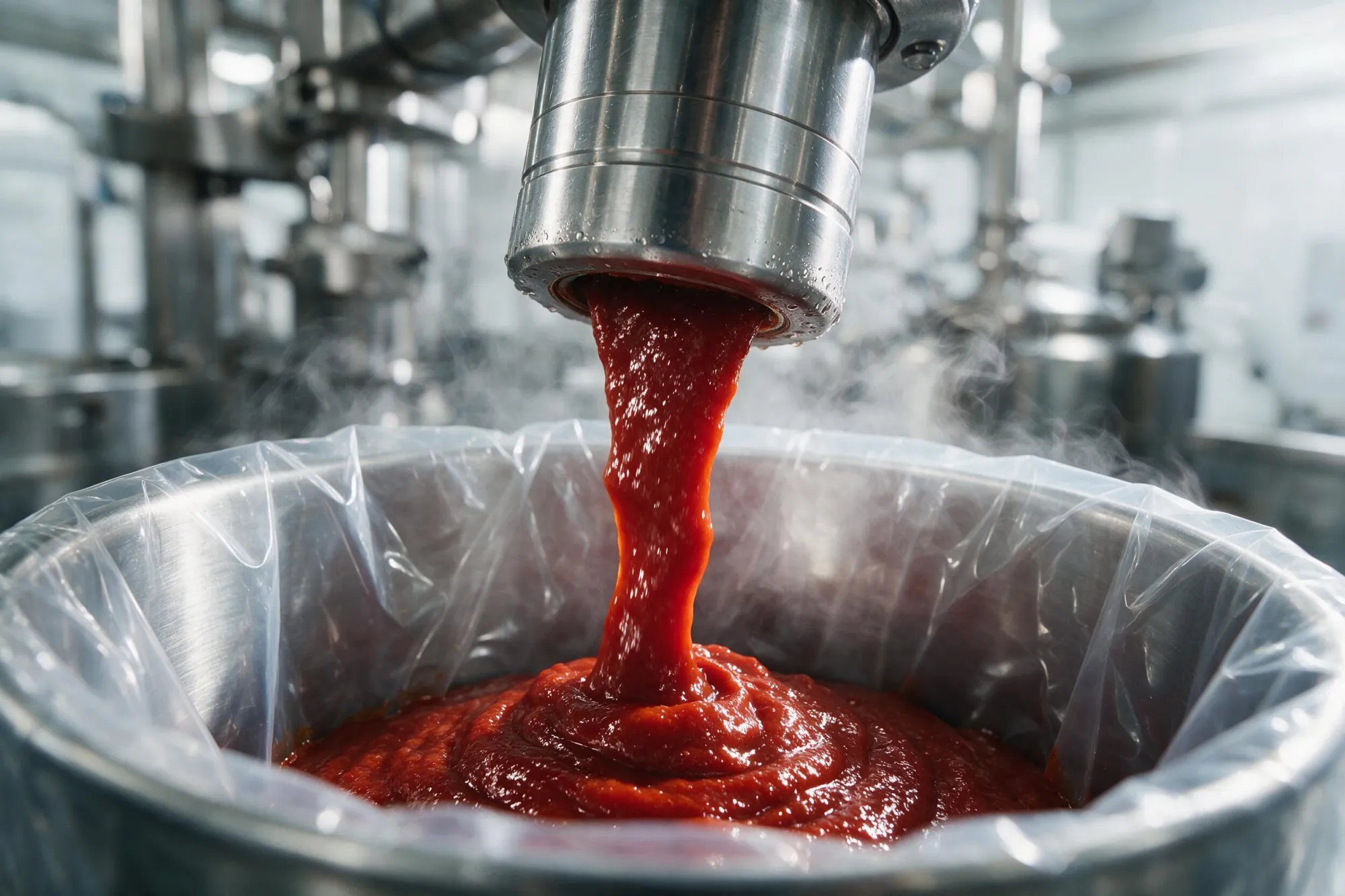
The Sadat City facility runs CFT processing technology for tomato, and the same aseptic discipline across the fruit concentrate and puree lines. Choosing current generation equipment is itself a sustainability decision: the steam demand of an evaporator and the yield of a finisher are properties of the machine, not of how hard anyone tries afterwards.
Where the energy actually goes.
Concentrating fruit means removing water, and removing water means heat. Evaporation dominates the energy bill of any concentrate plant; everything else on the site is a rounding error beside it. That is why multiple-effect operation and vapour recompression matter more than any other equipment choice on the line.
The principle is simple: use the vapour driven off in one stage to heat the next, instead of condensing it and burning more fuel. Each additional effect reuses the same energy again, which is how steam consumption per tonne of evaporated water falls to a fraction of a single-stage figure.
What leaves the site, and as what.
A tomato line produces more than concentrate. Peel, seed and pomace come off the finisher; condensate comes off the evaporators; cleaning solution comes off every changeover. Each of those has a destination, and the destination is the decision.
- Peel, seed and pomace leave the site as animal feed rather than as waste to landfill.
- Condensate from the evaporators is recovered for boiler feed and site cleaning duties rather than discharged.
- Clean-in-place cycles are sequenced so the final rinse of one becomes the first flush of the next.
- Effluent is treated to a standard that lets it irrigate rather than pollute.
Sizing the plant to the harvest.
Thermal efficiency is not only a property of equipment; it is a property of how the equipment is run. A line that idles hot between short runs wastes more than a line that runs near capacity for a concentrated campaign, whatever the nameplate figures say.
So intake is planned against the harvest calendar rather than against an even monthly split: staggered planting windows spread the crop across the campaign, and products are grouped by colour and acidity so fewer full changeovers are needed across a season.
Energy per tonne of finished product is recorded, but it is not yet a published figure. Comparing it across products and across campaign and off-season needs full seasons of data and the ISO 14001 system to verify it.
Alamir Ingredients — Sadat City, Egypt. Questions about anything in this article, or the evidence behind it, go to the export team.
Request a quote Download documentsOther articles.
 Sourcing
Shorter fields, lower footprint
Why we contract Egyptian growers before the season instead of buying on the open market.
Read the article → Packaging
Ambient by design
24 months without refrigeration — and the downstream cold chain that removes.
Read the article → People

Two hundred and fifty jobs
What 250 direct jobs in Sadat City consists of, and the skills it builds beyond our payroll.
Read the article →